
 Prompt appointments available
 Quick outpatient procedure
 Consultant-led care throughout
PCO can develop weeks, months, or even years after your original cataract surgery. It is estimated to affect up to 20-30% of patients within a few years of their procedure.
Private Laser Treatment
YAG Laser Capsulotomy
YAG laser capsulotomy is a quick, painless procedure that takes just a few minutes to restore the clear vision you enjoyed after your cataract surgery.
Prompt appointments available
Quick outpatient procedure
Consultant-led care throughout
01
Understanding
PCO
Following cataract surgery, the vast majority of patients enjoy significantly improved vision. However, in some cases, the thin, transparent membrane that sits behind your new artificial lens - known as the posterior capsule - can gradually become cloudy or thickened over time. This condition is called Posterior Capsular Opacification, or PCO.
PCO is a very common and entirely natural occurrence. It is not a sign that your cataract surgery has failed or that your cataract has returned. Rather, it is caused by the remaining cells on the capsule membrane slowly growing and spreading across its surface, creating a frosted or hazy effect that interferes with light reaching the back of your eye.
How Do I Know If I Have PCO?
The symptoms of PCO are often similar to those you experienced before your cataract surgery. You may notice:
ⓘGradual blurring or clouding of your vision
ⓘIncreased glare or halos around lights, particularly when driving at night
ⓘDifficulty reading or seeing fine detail
ⓘColours appearing less vivid than after your cataract surgery
ⓘA general sense that your vision has deteriorated since your original procedure
If you are experiencing any of these symptoms following previous cataract surgery, we recommend contacting your optician for an eye examination. They can confirm whether PCO is the cause and, if so, you can contact us directly to arrange your private YAG laser treatment.
Yag Laser
Capsulotomy
02
What Is YAG
Capsulotomy?
A straightforward, non-invasive laser procedure used to treat PCO and restore clear vision.
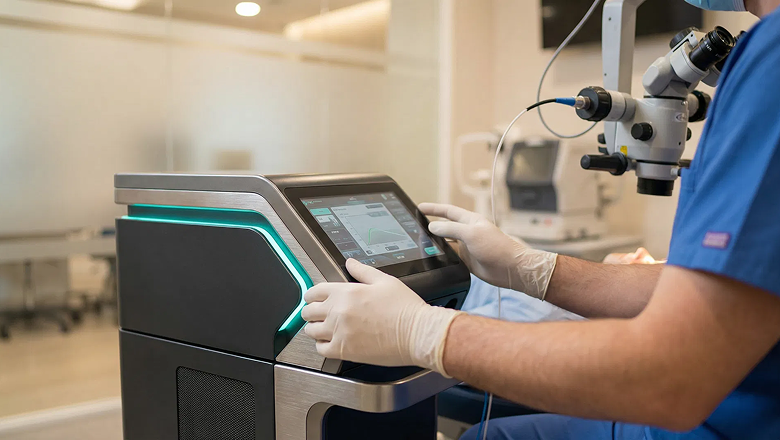
YAG laser capsulotomy uses a specialised laser - an Nd:YAG (neodymium-doped yttrium aluminium garnet) laser - which delivers precisely focused pulses of energy. During the procedure, your consultant uses the laser to create a small, precise opening in the centre of the cloudy posterior capsule. This allows light to once again pass freely through to the retina at the back of your eye, restoring the clear vision you had following your cataract surgery.
Key Facts
Procedure type
Nd:YAG laser posterior capsulotomy
Duration
Approximately 5 minutes per eye
Anaesthesia
Anaesthetic eye drops only (no injections)
Pain level
Painless
Recovery
Most patients notice improvement within 24 hours
Repeat treatment
Not usually required - one treatment is typically sufficient
Time in clinic
Approximately 1 hour (including preparation and checks)
Procedure Facts
Duration
5 mins
Anaesthetic
Local (Drops)
Initial Recovery
24 hours
03
Your Surgical Journey
YAG capsulotomy requires no needles, no incisions, and no recovery period. Most patients notice improved vision within a few hours.
Pre-Assessment
+
What happens: slit-lamp examination to confirm PCO, visual acuity measurement, eye pressure check, a discussion of the procedure, and consent.
What to tell us: all current medications including blood thinners; any previous eye surgery in addition to cataract; any previous laser procedures; any history of retinal detachment or high myopia.
What to bring: your appointment letter, a list of all current medications, your glasses if you wear them, and sunglasses as your eyes will be sensitive after dilating drops.
Morning of procedure: eat and drink normally, no fasting required; continue all regular medications; arrange transport home; allow approximately 1.5 hours; no eye makeup; do not drive, as dilating drops will blur vision.
Day of Surgery
+
1. Arrival and preparation: dilating drops are placed in your eye and take 20 to 30 minutes to work fully.
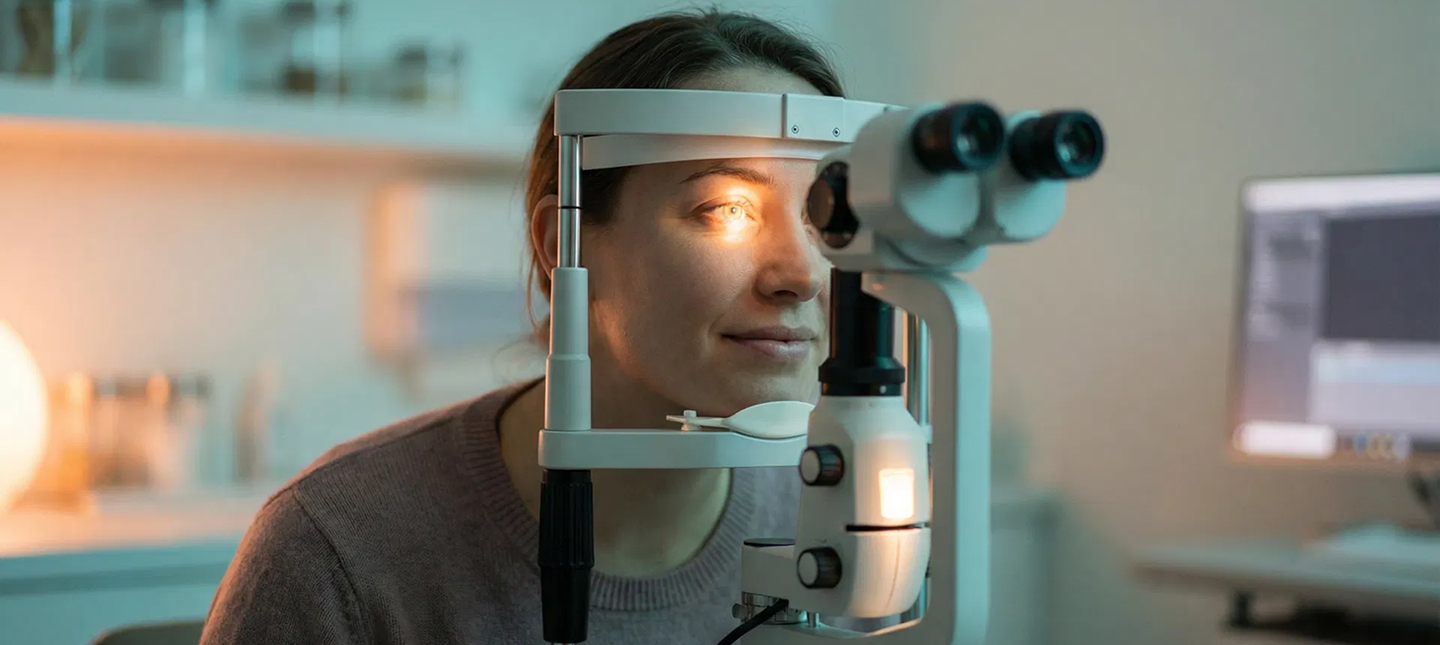
2. The procedure: you sit at the laser slit-lamp, with no operating theatre required. A contact lens is gently placed on your eye. The laser creates a small clear opening in the cloudy capsule. You will see flashes of light and hear clicking sounds, which is normal. It takes 3 to 5 minutes.
3. Pressure check: your eye pressure is checked after the procedure to ensure it has not risen.
4. Going home: anti-inflammatory drops are prescribed. You may go home with your escort. Vision will be blurred from the dilating drops for 4 to 6 hours.
Time required: the laser itself takes 3 to 5 minutes; please allow 1.5 hours for your visit. You must not drive yourself home.
After Surgery
+
Immediately after: rest at home for the remainder of the day; wear sunglasses as your pupils will be dilated and light-sensitive; vision is blurred from the dilating drops for 4 to 6 hours; new floaters may appear, which is debris from the capsule opening and settles over weeks.
The golden rules: use anti-inflammatory drops as prescribed for one week; you can resume reading and screens the following day; resume driving the following day once vision is clear; do not drive on the day of the procedure; do not rub your eyes; no swimming for one week.
Eye drop technique: wash your hands; tilt your head back and pull the lower lid down; look up and do not let the tip touch the eye; squeeze one drop into the pocket; close the eye gently for 60 seconds; press the inner corner for 60 seconds; wait 5 minutes between different drops.
When to Seek Help
+
Call 01732 756789 immediately if you have: a dark curtain or shadow anywhere in your vision (possible retinal detachment); a sudden significant drop in vision after initial improvement; flashing lights persisting for more than a few minutes; or severe eye pain.
Contact us within 24 hours for: dense or increasing floaters after the first few days; vision not improving after 48 hours; or significant pain beyond mild grittiness.
Normal and expected: blurred vision for several hours on the day from the dilating drops; new floaters in the first 2 to 4 weeks as debris settles; flashes of light during the procedure itself; mild grittiness for 1 to 2 days.
What You Will Experience
Understanding the sensory experience can help ease any concerns. Here is what patients commonly report during YAG laser treatment.
Painless
The procedure is painless thanks to anaesthetic eye drops. You may feel a mild tapping sensation, but nothing uncomfortable.
Cool Sensation
Water is rinsed over your eye during the procedure. This can feel rather cold but is a normal part of the treatment.
Bright Light
The microscope light may feel intense, but it is not painful. You may also see flashes of light from the laser pulses.
Soft Sounds
You might hear soft clicking sounds from the laser. The whole treatment usually takes just a few minutes.
04
Why Choose
Private Care?
Rapid Access to Treatment
You can typically have your consultation and treatment scheduled within a few weeks, allowing you to return to clear vision without delay.
Consultant-Led Care
You will be seen by the same experienced consultant throughout your treatment - from assessment through to the laser procedure and any follow-up - ensuring continuity and personalised care.
Dedicated, Comfortable Environment
Our clinics are designed to provide a calm, welcoming experience. You will receive unhurried, individual attention at every stage of your visit.

One quick treatment.
Clear vision restored.
Clear vision restored.
05
Frequently Asked
Questions
We understand that deciding to have eye surgery is a significant step. Here are answers to some of the questions our patients most commonly ask.
Is YAG laser capsulotomy painful?
No. The eye is numbed with anaesthetic drops, and most patients feel little or no discomfort during treatment.
How long does the procedure take?
The laser treatment itself usually takes only a few minutes, though your full visit is around one hour including checks and drops.
Will I need the treatment more than once?
Usually not. In most cases, one treatment is enough to restore clear vision.
How soon will my vision improve?
Many patients notice improvement within 24 hours, though some people may take a little longer for vision to fully settle. You may notice some new floaters immediately after the procedure; these usually settle.
Can both eyes be treated on the same day?
This depends on your clinical assessment and your consultant’s recommendation. Your treatment plan will be tailored to you.
When can I drive after the procedure?
You should not drive on the day of treatment because of dilating drops. Most people can resume driving the next day if vision is clear and legal standards are met.
When can I return to work?
Most patients can return to normal activities quickly, often the next day, depending on vision and the nature of their work.
Are there any risks or side effects?
YAG capsulotomy is very safe. Temporary floaters and light sensitivity can occur, and serious complications are uncommon.
Do I need a referral?
No. You can self-refer directly for a private consultation, though referrals from your optometrist or GP are also welcome.
Ready to See Clearly Again?
If your vision has become cloudy or blurred since your cataract surgery, YAG laser capsulotomy could be the solution. Contact us today to book your private consultation.


Our Locations

CES Medical - Chatham
Kent
CES Medical - Headcorn
Kent
CES Medical - Tunbridge Wells
Kent
 View our Private Cataract Surgery page